

Personalised adaptive learning for government schools
Learning that adapts to the student's true understanding

iPrep PAL gives each student a diagnostic test, a matched path, and a final test for every chapter, on tablets, notebooks, and mobile phones, with dashboards from the classroom to the state. It works with or without internet, and syncs when a connection is available.
Start a Conversation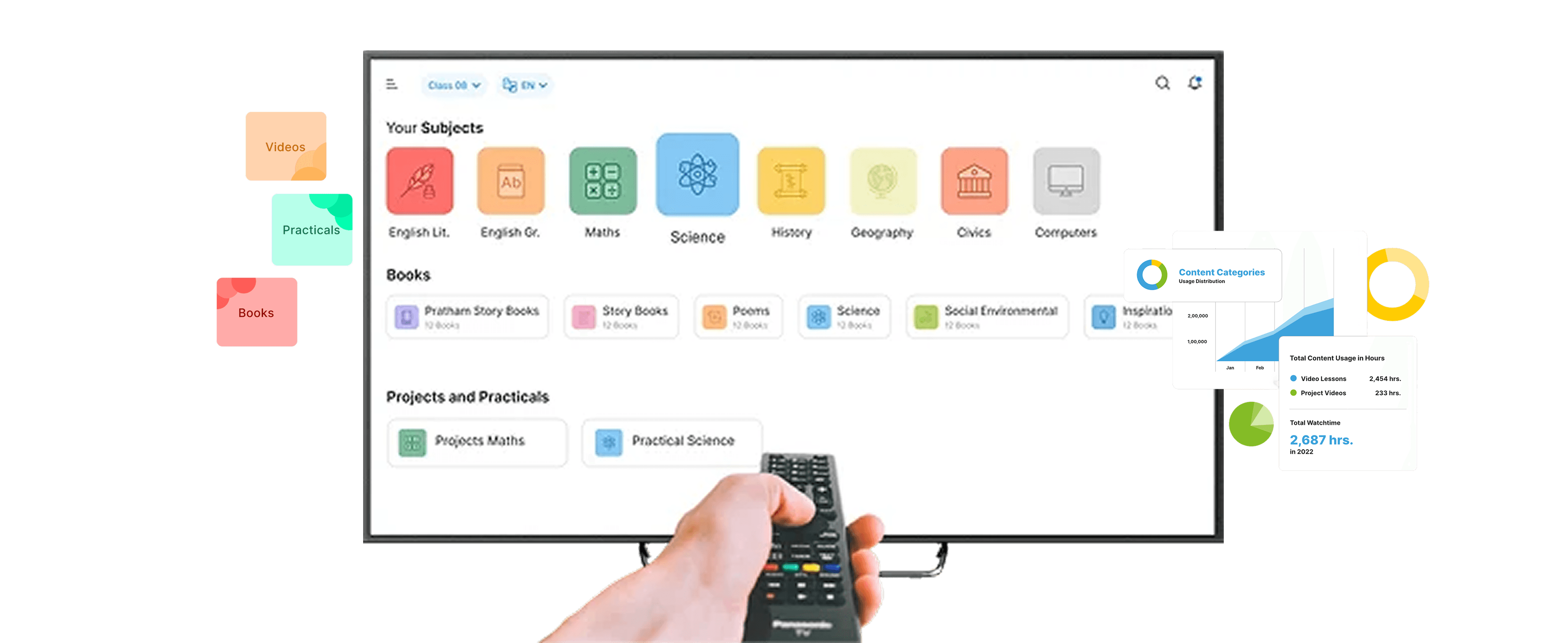

Quality validated by EdTech Tulna
Built on the framework for personalised adaptive learning that IIT Bombay, Central Square Foundation, and the Ministry of Education set up.

Curriculum-aligned
Aligned to state board curricula for Uttar Pradesh, Haryana, Madhya Pradesh, Rajasthan, and Himachal Pradesh, and customisable for other boards.

Rich content
Interactive and animated lessons, practice with instant feedback, remedial videos, books, notes, and life skills videos.

Nudges and gamification
Encouraging nudges keep students engaged in regular, independent use.
With or without internet
Content is preloaded, and usage syncs to the dashboard when a connection is available.
Personal devices or a shared iPrep PAL Lab
Tablets, notebooks, and mobile phones, used individually or in turns from a charging rack.
English and Hindi medium
Content is available in both languages.
Reporting to state systems
Usage can sync with a state's DIKSHA platform through an API and report to a central MIS.

Opting for Deeper, Lasting Impact
Before you select an Implementation Partner
01
Ask how the test result changes the path
Ask whether the diagnostic result changes the content a student sees next, and whether the path can return to earlier-class topics when the gap sits there.
02
Ask for baseline and endline data
Ask how many students took both tests, over what period, and whether the figures come from a statewide programme or a pilot.
03
Ask how it works with limited connectivity and state systems
Ask whether it runs offline, how usage data reaches a state platform or central MIS, and which roles can see which reports.
04
Ask what support continues after launch
Ask what training, helpdesk, and reporting cadence follow the first rollout, and how long they last.
The Full Stack
The Components that make our PAL programmes deliver effective, tangible outcomes



Hardware
Personal devices or a shared iPrep PAL Lab
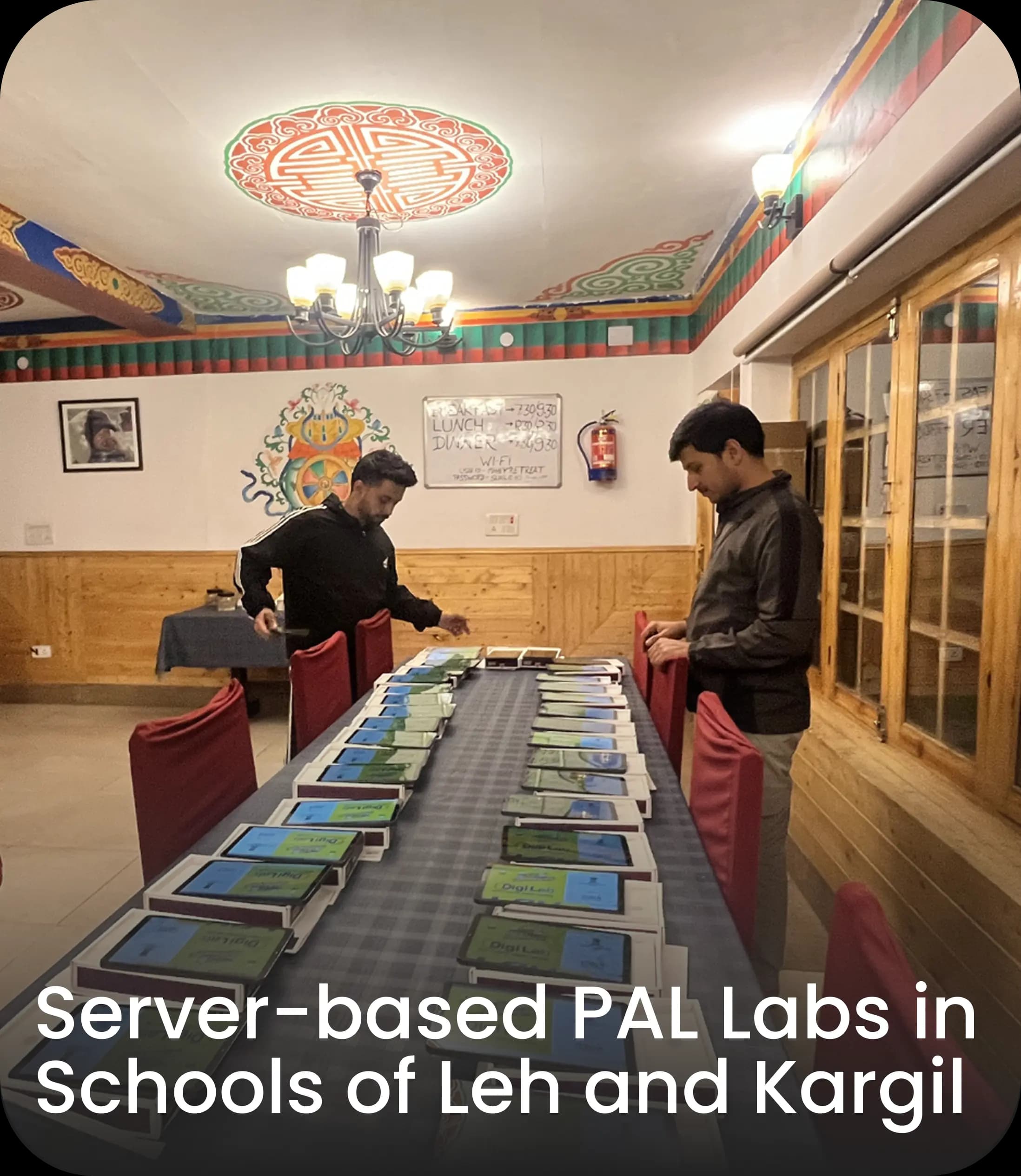
Students can learn on individual tablets, notebooks, or mobile phones, or share devices in an iPrep PAL Lab, a charging-and-storage rack used in turns through individual logins. Where connectivity is limited, a local server can deliver content to devices over the school network.



Adaptive LMS (Software)
Adaptive Engine or LMS (Software)
Lessons, tests, and practice sit in one place, and each student's next step follows from the chapter test result. Activity is recorded whether a device is online or offline, and syncs to the dashboard when a connection is available.


Content
Rich, curriculum-aligned resources
Interactive and animated lessons, remedial videos, topic-wise practice with instant feedback, digital syllabus books, notes, practicals, and a book library with stories, poems, biographies, and life skills videos, in English and Hindi medium. Versions exist for several state boards.

Analytics
Progress data from student to state
Views are available by student, class, block, district, and state, each with its own login. Teachers, principals, government officials, and implementation partners see the data relevant to their role. Usage can also sync with a state's DIKSHA platform and report to a central MIS.

Support
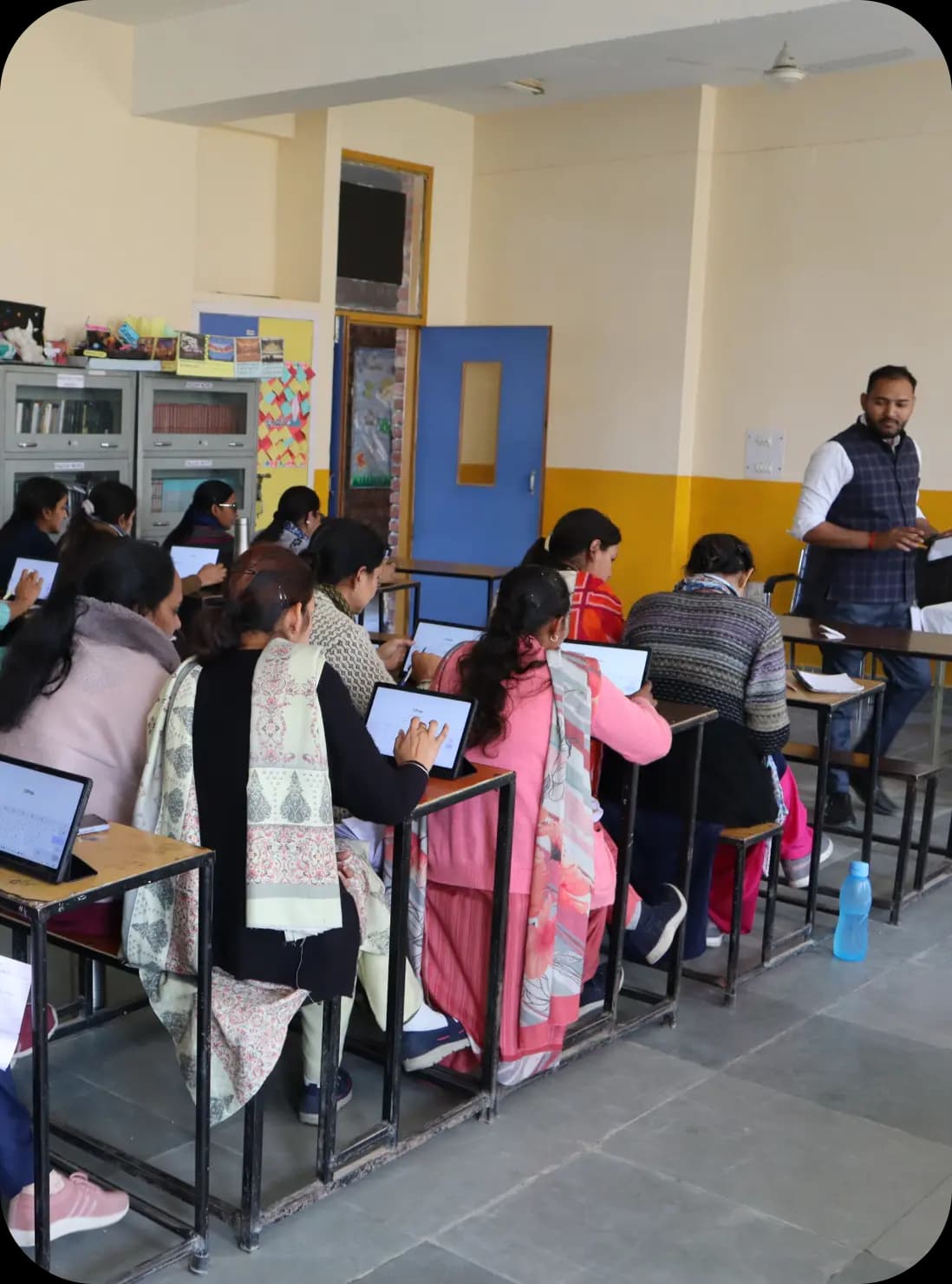
Teacher training and ongoing support
iDream prepares the teachers at each school to read iPrep PAL reports and plan help for each group of students. A telephone helpdesk runs from 9 to 6, queries are raised as tickets with a 24-hour turnaround target, and ground teams can visit schools where needed. Periodic usage reports and device health checks follow launch.

Designed in line with government education schemes and policies
How iPrep PAL supports the frameworks and funding lines behind school programmes.

NEP 2020
Chapter-wise tests and a path matched to each student reflect the policy's focus on competency-based learning.

NIPUN Bharat
Early diagnostic tests help teachers find gaps in foundational skills, in line with the mission's focus.

Samagra Shiksha
Shared labs and personal devices, with curriculum-aligned content, fit the scheme's focus on technology in classrooms.
PM SHRI
Student-level progress and usage data help schools show how technology is used in learning.
DIKSHA
Student activity can sync to a state's own platform, so progress appears where officials already look.
PM e-Vidya
Learning at school and at home, on shared or personal devices, fits the programme's digital direction.
State programmes
Dashboards at every level give programme owners one view across districts and blocks.
Our report card
Results from programmes
across Bharat

Read how iPrep PAL programmes have worked in schools and learning centres, from diagnostic tests to grade-level outcomes.
Personalised Adaptive Learning (PAL) at Scale in Haryana's e-Adhigam Programme
Large-Scale Implementation of Digital Library with PAL: Closing Historical Learning Gaps
Bringing Blended Digital Learning Across 559 PM SHRI Schools in Uttar Pradesh





Personalised Adaptive Learning for Government Schools
- A diagnostic test for every chapter, a path matched to each result, and a final test to confirm progress.
- Works with or without internet, and syncs when a connection is available.
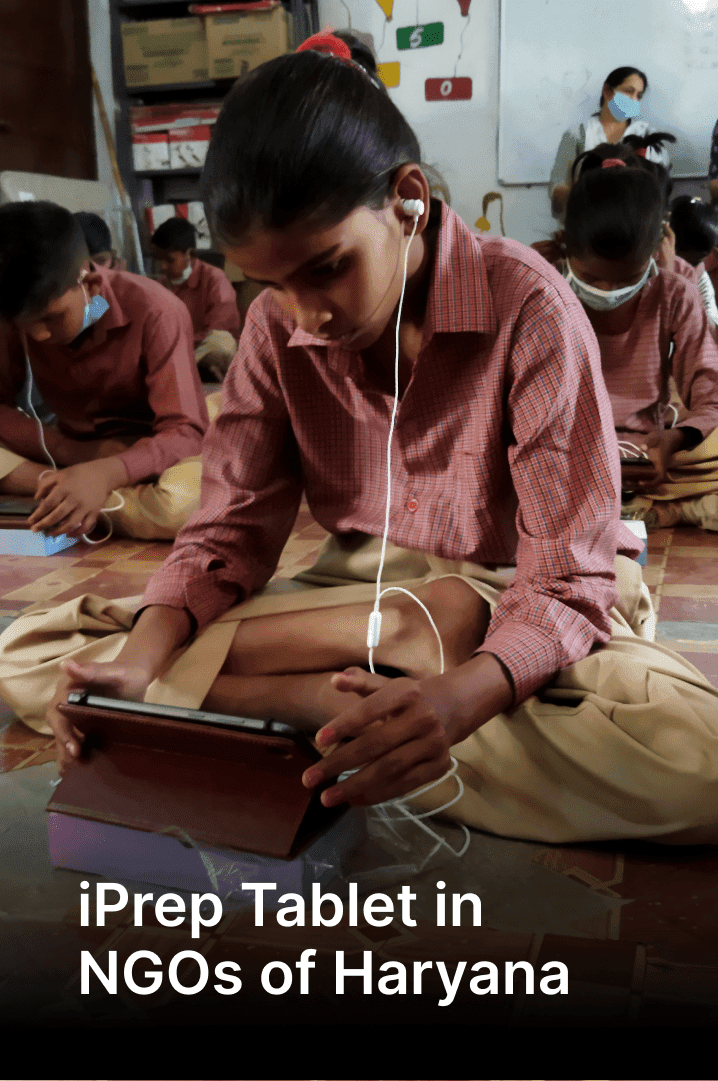
- Runs on tablets, notebooks, and mobile phones, used individually or from a shared iPrep PAL Lab.
- Content in English and Hindi medium, with versions for several state boards.
- Reporting from student to state, with a separate login for each role.
- Teacher training, a telephone helpdesk, and periodic usage reports.


Planning a Personalised Adaptive Learning programme?
Let us know more about you so we can assist you better.
FAQs
Questions that departments, funders, and implementation partners ask when planning a personalised adaptive learning programme.
iPrep PAL is a personalised adaptive learning solution that finds each student's learning gaps chapter by chapter and builds a path back to grade level. It runs on tablets, notebooks, and mobile phones, and gives teachers and programme teams a dashboard showing which students need support, and in which topics.